1. Looking Out at the Water
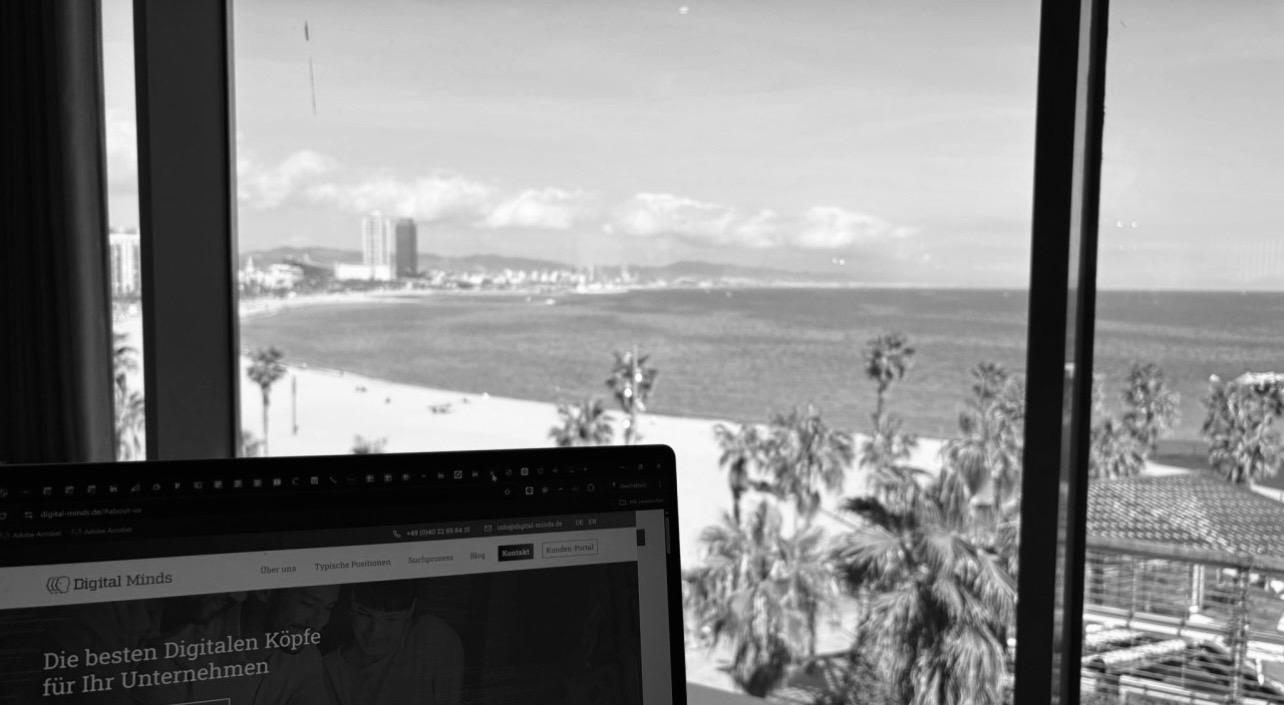
This is not about (geo-)politics. But when I look out at the sea from my co-working space in Barcelona in the morning, I inevitably think of another place with a very similar panorama: Dubai. There, too, you look out over water and beach. The Burj Al Arab there and the W Hotel here create almost the same silhouette. You see the skyline. Internationality. Combined with the feeling of momentum, freedom, and security all at once.
For a long time, Dubai was considered the epitome of a safe haven. Economically strong. Politically stable. Internationally connected. A place where many established their professional and personal center of life - convinced they had found a safe haven there, beyond the grey drizzle of Germany. All of it seemed certain - until last Saturday.
And that is what gives pause: how quickly a reality - or our perception of it - can shift.
2. Stability Is Not a Guarantee
Of course, some regions are more stable than others. That is precisely why people choose Barcelona, Lisbon, Dubai, Cape Town, Bangkok, or Bali. Quality of life. Internationality. Economic dynamism - all combined with a sense of perceived security.
These decisions are rational. But stability is not a permanent condition. It is the result of underlying conditions. And conditions change. Sometimes gradually. Sometimes abruptly.
What was considered safe yesterday is reassessed today. Not necessarily because it has objectively become unstable, but because the environment - our world - has become more complex.
3. Companies Often Think in Similar Patterns
I see the same mechanism in organizations. Many companies build structures as if markets, regulation, technology, and the geopolitical environment were reliably predictable. They invest. They plan growth. They optimize processes. On the assumption that the foundation is solid.
Until external factors change the equation: supply chains, energy prices, regulatory shifts, technological disruptions. All factors that increase the uncertainty under which decisions must be made. Stability is often mistaken for habit.
4. The Real Leadership Challenge
For leaders, this has an important implication. It is not about identifying the supposedly safest place. Nor is it about finding the most “crisis-proof” business model. It is about structuring organizations in a way that enables them to deal with uncertainty professionally.
How quickly can priorities be adjusted? How clear are decision-making processes and criteria? How resilient is the culture when predictability declines?
In my conversations with CEOs and executive boards, this is becoming increasingly relevant. Not the question of where stability is guaranteed. But how capable an organization remains when stability becomes relative - or disappears altogether.
5. My recommandation
Where in your organization is stability currently taken for granted?
Which assumptions are treated as fixed, even though they depend on external conditions?
And how well prepared is your organization if those conditions shift?
Because real safe havens exist only in our minds. They are not guarantees, but assumptions about reality - and realities can change quickly.