1. Development begins with true perspective-taking
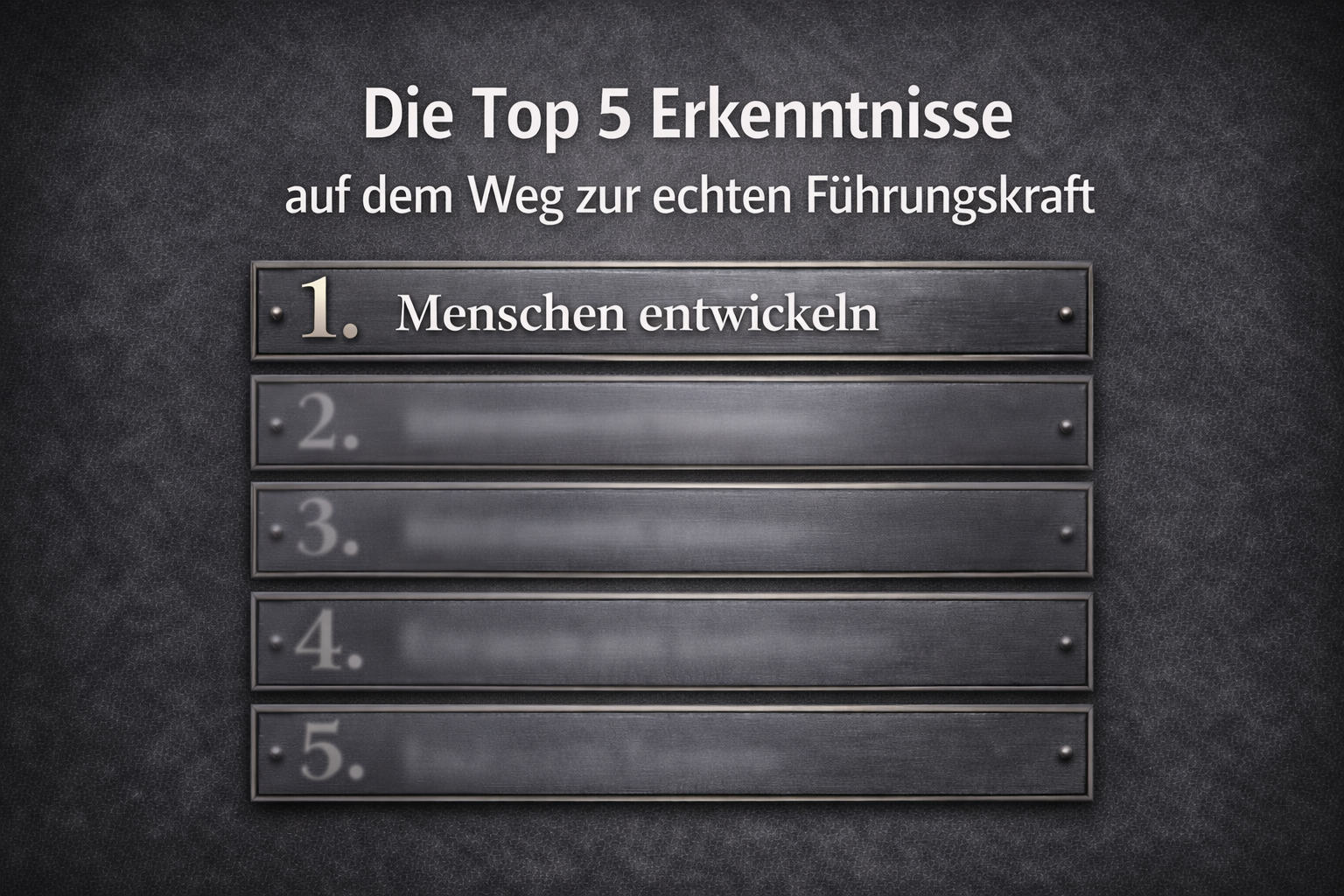
In the previous blog articles, I covered classic learning fields on the path to becoming a true leader: letting go, not controlling everything, communicating clearly, and leading individually. Today, we conclude with rank #1 - the gold medal on the podium of real leadership.
This topic goes even deeper. It fundamentally changes the role of leadership.
Developing people - or rather, enabling their development - does not mean managing them better. It means genuinely putting yourself in their position.
A leader who develops others does not only ask: What must this person deliver today?
More importantly, they ask: What would move this person forward in the long term? What aligns with their strengths, their interests, their ambitions? And what do they need to get there?
2. Managing organizes work; development shapes careers
Many leaders stop at managing. Setting goals, assigning tasks, demanding results. That is necessary - but it is not what shapes people.
Development begins where leadership becomes personal. Not private, but human. Where you are willing to take someone’s individual path seriously - even if it is not the most convenient path for the organization. Even if you are “only investing” without knowing whether you or your company will ever benefit from the outcome.
An uncertain investment - and therefore one that is made far too rarely.
I remember such a situation very clearly from my own career.
3. A defining leadership moment
Many years ago, my manager asked me the essential questions that drive real personal development: Where do you want to go? What motivates you? What are you still missing?
In that conversation, I told him that I had originally planned to pursue a doctorate. I had even started a dissertation, but then chose the safer and easier route: legal traineeship, full-time career, academic ambitions put aside. I felt that deeper academic work would strengthen me in the long run and give me intellectual depth - but that it was now too late and too demanding.
His reaction surprised me and shaped me profoundly.
He said: “I see it differently. We should make that possible.”
And he meant it.
He supported me in finding a professor and a topic. Over the years, he created the conditions that allowed me to work on my dissertation alongside my job. He accompanied me on that journey, encouraged me, followed up, and stayed committed - until I completed my doctorate successfully.
That was not a bonus. That was excellent leadership. And I will always be grateful for it.
4. Development is demanding - and that is exactly why it works
Developing people takes time, attention, and sometimes courage. It means enabling individual paths instead of treating everyone the same. It means optimizing not only short-term performance, but long-term potential.
Many leaders shy away from this - often unconsciously. Because development is less predictable than management. Less efficient in the short term. But it is sustainable.
Those who avoid this step often remain in a mode of constant correction.
Those who embrace it build teams that grow independently.
5. My recommandation
When was the last time you asked someone on your team where they want to be in three or five years? Whose development are you currently treating as a “nice to have,” even though it should be central to your role? And who, in your own career, truly developed you - rather than simply managing you?
Because real leadership is not measured by how smoothly processes run.
It is measured by how much people grow because of it.