1. Speed as a status symbol
In 2010, I moved from a regional entity to the corporate headquarters. I still remember my first impressions from those early weeks: suddenly everything was international. Meetings in English, conference calls with Brussels, Berlin, and other locations. The topics were bigger, more complex, more important.
And above all: everything was faster.
Executives and senior leaders were completely scheduled out. Assistants coordinated meetings, drivers were always on standby, even corporate jets were available to move quickly between locations around the world. Every slot was booked. Even ten minutes for a quick alignment was a relevant appointment.
There was a simple rule: the more important someone was, the less time they had. And the faster they moved through the hallways. From my client companies and countless conversations with candidates, I know this is often still the case today.
2. A different sense of time
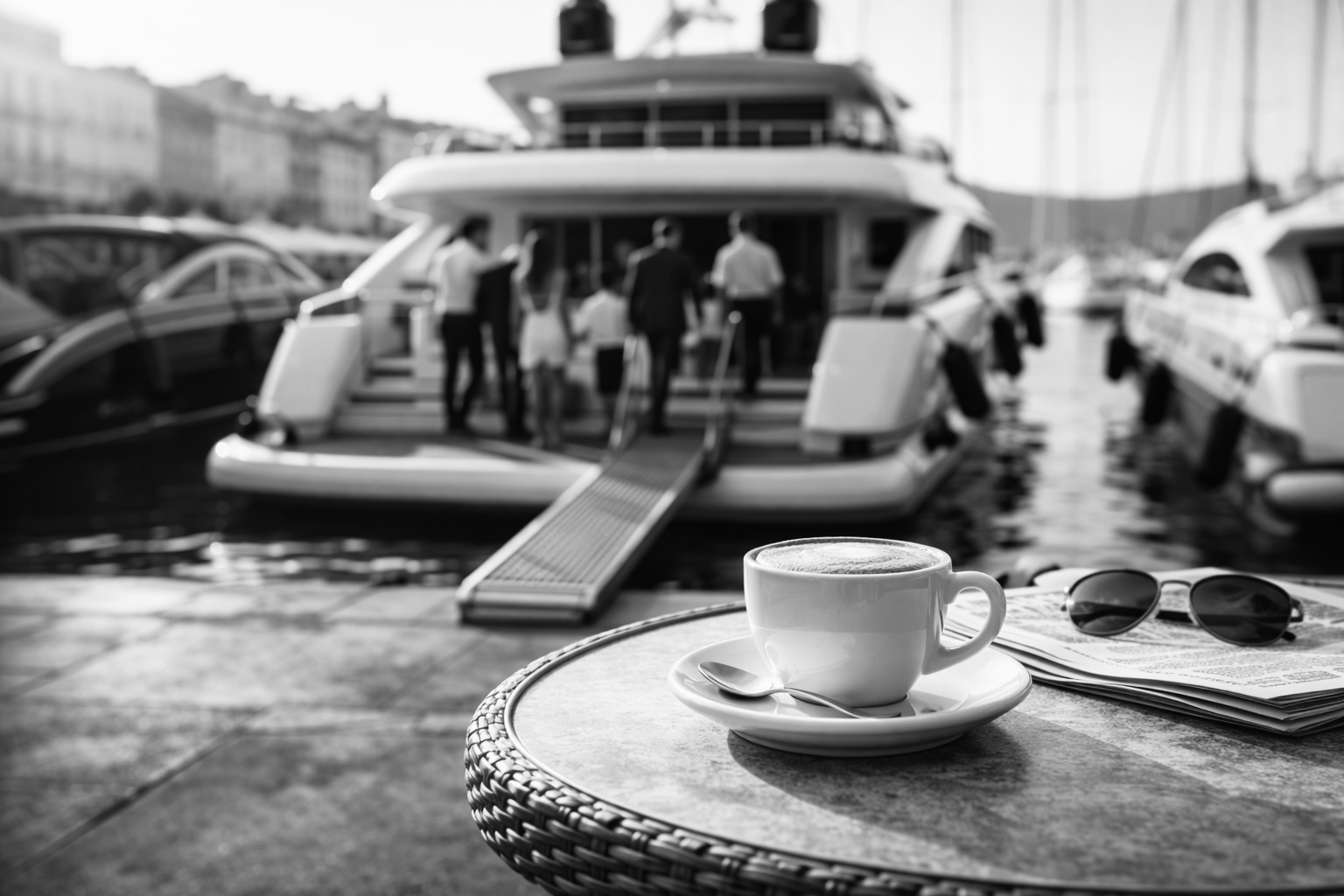
Fifteen years later, I find myself sitting at Café de Paris in Saint-Tropez. An eight-euro cappuccino, a view of the harbor. In front of me are the yachts of the super-rich. I’m on a road trip through Europe, now self-employed. Taking a full vacation is difficult, but working a few hours in the morning and enjoying the rest of the day - that works.
Suddenly, something happens on the yacht right in front of me: the crew lines up, two black vans arrive, the owner’s family steps out. People stop and watch as the luggage is unloaded and brought on board.
After a few minutes, I notice something: nothing is happening quickly. People are talking to each other and to the crew. They take their time. No one seems rushed. Everything unfolds almost in slow motion.
I catch myself becoming impatient. Why is this taking so long? Don’t they want to leave?
3. What calm really means
Then it becomes clear to me: why should they be in a hurry? I’m sure they are not only this relaxed on vacation, but in general.
No one is expecting them in the next time slot. No one is pushing them toward the next decision. No one measures their value by their speed.
And that is the key difference:
In the corporate world, speed was a sign of importance. Here, calm is a sign of sovereignty.
4. Who is actually driving whom?
I’m neither envious of the super-rich nor do I aspire to own a yacht like that. But the calmness and slowness inspired me and once again made something very clear:
Those who are always in a hurry are usually being driven - by expectations, by structures, by other people. And often by themselves.
This does not mean that speed is inherently bad. But it is rarely a sign of control. More often, it is the opposite.
5. My personal approach
For some time now, I’ve been structuring my days more deliberately. Not just lining up meetings, but consciously creating space in between. Time to think. Time to reflect. I am aware that this is a luxury not everyone can afford.
But there is a difference between having no time and not taking it.
6. My impulse
When was the last time you were truly without time pressure?
And how often do you confuse speed with importance?
Because perhaps the one who gets furthest is not the one who moves fastest but the one who decides at what pace to live.