1. A modern profession with old roots
Personal consulting or executive search is a profession of the modern age. Databases, international markets, digital platforms and increasingly AI shape the day-to-day work.
And yet, many elements of this profession are much older than one might initially think.
2. Different historical roles, similar functions
Looking back, the most obvious parallel is the matchmaker, who played a central role well into the 19th century. It was never just about bringing two people together, but about assessing whether they would be a good long-term match. A failed match was not only problematic for the couple, but also a serious reputational risk for the intermediary.
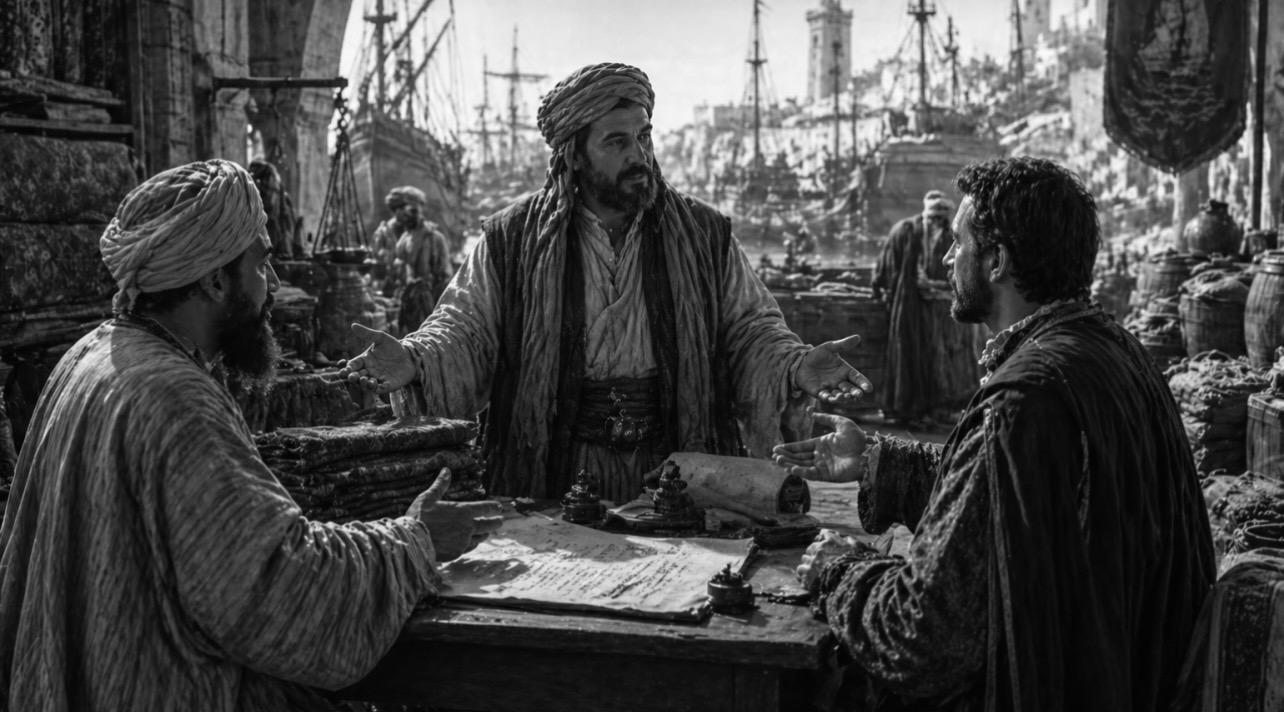
In trade, commission agents were already fulfilling a similar role in the Middle Ages. They connected supply and demand, had access to both sides, and enabled transactions that would not have happened without them. My father earned his living in a similar way: as a timber trader, he arranged large-scale transactions between forestry operations in Scandinavia and sawmills in Germany. And the role of the real estate broker is still widely known today.
Diplomats have been mediating between states for centuries, delivering messages, building bridges, and creating understanding and trust.
Even the medieval court advisor or court jester offers a surprisingly fitting parallel. Both had access to those in power and the task of voicing uncomfortable truths: that decisions were not working, that expectations were unrealistic, that perception and reality “out there” did not align. Today, this is not very different. As a personal consultant, you tell companies that a search will not work as defined because expectations are unrealistic or not aligned with the market. These conversations are rarely pleasant, but often the decisive ones.
3. Three constants
If you abstract all these roles, three elements remain:
First, information asymmetry. Both sides have different levels of knowledge or only a partial view of the market, and someone bridges that gap/ - through network, access, and better information than either party alone.
Second, building bridges. The intermediary understands both sides and makes them understandable to each other.
And third, trust. Without trust, none of these connections work.
4. What has changed and what remains
The first element is losing importance. Information is widely available. Access is becoming more transparent. Research is easier - in the age of information and digital platforms. With AI, this trend will accelerate further, and the traditional information advantage is shrinking.
What remains are the other two elements: building bridges and, above all, trust. Because even if information is available, the key question remains: whom do I believe, and who helps me interpret what really matters?
The profession is therefore changing significantly. Less information broker, more translator. Less about access, more about interpretation. And above all: more of a trusted counterpart. Or put more bluntly: knowledge becomes a commodity. Trust does not.
5. My impulse
Where in your environment are decisions still justified by supposed information advantages—even though information is already widely available?
And where is real value created through interpretation, bridge-building, and trust?
Because many systems appear more modern than they actually are. Their underlying logic is not.