This edition is a little different from usual. It is longer, does not follow my usual structure, and is not primarily about leadership or management. At least not at first glance.
Because this time, I want to tell you about a journey. Five days in Rwanda that challenged some of my assumptions about the country - and, to be honest, about Africa as a whole.
How I Ended Up Going to Rwanda
About a year ago, I started collaborating with OMR in Executive Search. During lunch with Philipp Westermeyer in July this year, our conversation eventually turned to Rwanda.
A few months earlier, Philipp had hosted Simon Sondern on the OMR Podcast. Simon moved to Rwanda in his mid-twenties about eleven years ago and has since built a group of companies that develops, builds, markets, and manages residential real estate on a large scale. At the end of the podcast, half jokingly, they came up with an idea: We should really take a group to Kigali one day and see for ourselves what is happening there.
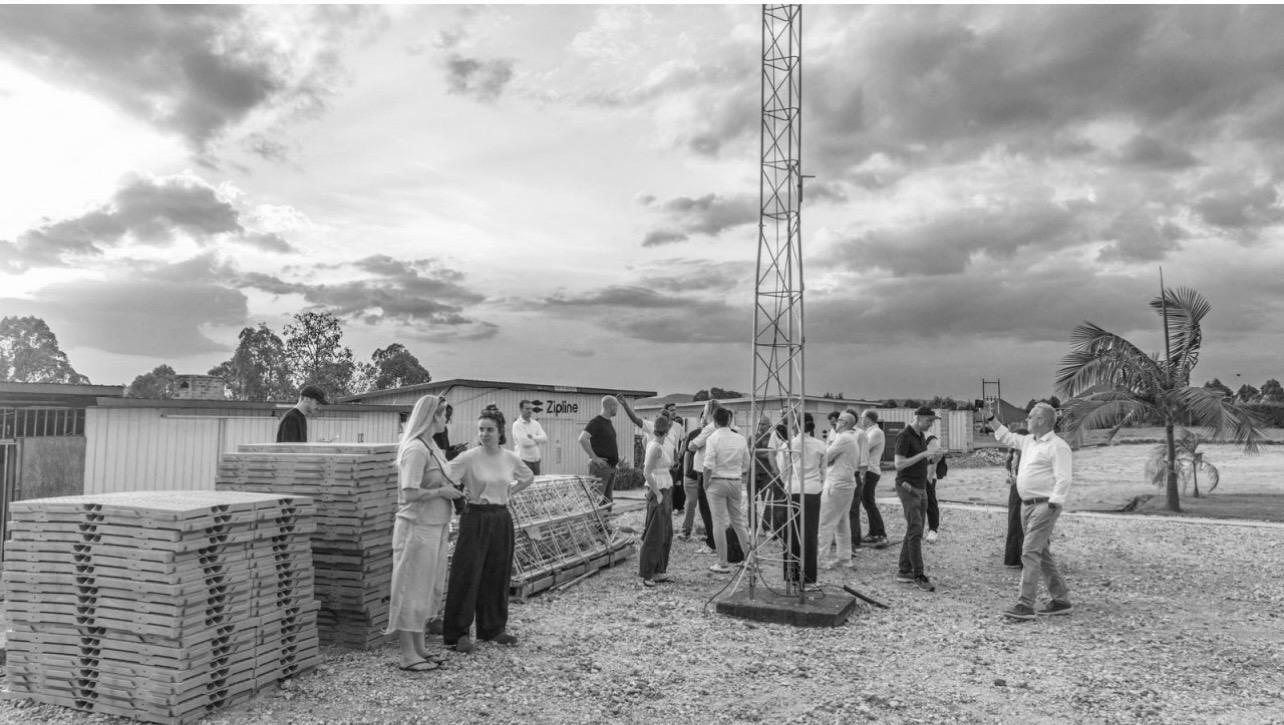
Apparently, quite a few people liked the idea. After the podcast episode, hundreds of listeners got in touch saying they would like to join. That eventually became OMR Travel and a few days ago, I actually found myself in Kigali with a group of around 20 entrepreneurs. The official itinerary explicitly promised no luxury vacation, but rather access to local companies, institutions, and decision-makers.
Five days later, I returned enthusiastic and - this really is the right word - energized.
The Picture I Had in My Head
I am certainly no expert on Africa. And that is precisely why I first need to say something about the image I had of the continent.
When I thought about many African countries, I thought of difficult economic conditions, dependence on development aid, corruption, political instability, and civil wars. Of course, I knew that it makes no sense to generalize about a continent of 54 countries. And yet that vague image was there.
With Rwanda, there was another dimension. In 1994, more than 800,000 people were murdered in just around 100 days during the genocide against the Tutsi. The country was economically and socially devastated afterward, and millions of people were displaced. A small, landlocked country with few significant natural resources, carrying the legacy of one of the worst humanitarian catastrophes in recent history.
Not exactly promising conditions for what we saw in Kigali almost 32 years later.
We Have No Chance. So Let’s Take It.
That is roughly how I would describe the approach we heard about in many of our conversations.
We met representatives from ministries and public authorities, entrepreneurs, investors, and people who have lived in the country for years. Of course, these were selected conversations, and five days are nowhere near enough to truly understand a country. But the story we heard again and again was remarkably consistent.
After the genocide, the first priority was to establish security and reunite a deeply divided society. At the same time, it was clear that if companies and foreign investors were going to commit to Rwanda, they had to be able to trust that people, capital, and property would be safe.
What followed was a decidedly business- and technology-friendly strategy. Rwanda did not want to wait for economic development to happen at some point. The country wanted to organize it.
This led to Vision 2020, launched in 2000, followed later by Vision 2050. The current goal is ambitious: Rwanda aims to become an upper-middle-income country by 2035 and a high-income country by 2050.
What impressed me was not so much the existence of such a plan. After all, strategy papers exist everywhere. What was remarkable was that around 90 percent of the targets defined for 2020 were actually achieved. And the new plan through 2050 is being pursued with the same seriousness, with clear milestones and responsibilities.
Digitalization - but for a Different Reason
Public administration is a good example.
In Germany, we usually discuss digitalization in terms of efficiency. Processes should become faster and cheaper, citizens should have to fill out less paperwork, and companies should spend less time dealing with bureaucracy.
In Rwanda, we repeatedly heard about another dimension: Digitalization can also help prevent corruption.
The logic is remarkably simple. If an application is submitted digitally, the fee is transparent, its status can be tracked, and a decision must be made within a defined period, there is less room for individual discretion. There is less reason to pay someone to make sure a case is processed more quickly or even lands on the right desk in the first place.
In 2014, Rwanda launched Irembo, a central portal for government services. As early as 2020, the World Bank described more than 96 digital public services and a network of Irembo agents through which people without their own digital access could also use these services.
I found that last detail particularly interesting.
Digitalization only works for society as a whole if it does not exclude those who do not have a smartphone, internet access, or the necessary digital skills. That is why there are people who, for a small fee, help others handle their administrative matters digitally.
Not a return to paper, but assistance in accessing the digital system.
And Then We Found Ourselves at Zipline
Perhaps the most impressive stop on our trip for me was Zipline.
The company’s idea initially sounds almost like something from an innovation workshop: Hospitals order blood supplies and medication as needed, autonomous aircraft launch from a distribution center and deliver them directly to healthcare facilities within a short period of time.
Except that this is not a concept.
We were standing right there watching it happen.
Every few minutes, drones shot into the sky. Blood, medicines, and other medical products are delivered this way to healthcare facilities across the country. Today, Zipline serves more than 900 facilities in 27 of Rwanda’s 30 districts.
It changes the logic of healthcare delivery. A hospital in a remote region does not need to keep every conceivable type of blood product and medication in stock. What is urgently needed can be requested and delivered through the air.
And suddenly, questions that might sound like objections in a presentation become technical problems that need to be solved: What happens in bad weather? How do you coordinate the airspace? What about other aircraft? How does it work at night?
These questions were not used as reasons not to pursue the concept.
Solutions were found instead.
In 2016, Rwanda became the first country in the world where Zipline launched its autonomous delivery service. In 2026, the partnership was expanded again, with plans for the country to establish a nationwide autonomous logistics infrastructure.
The impact in medical emergencies is particularly important. An independent study found that the introduction of drone logistics significantly reduced in-hospital mortality related to postpartum hemorrhage.
Technology not as an end in itself, but as a solution to a very specific problem.
A Very Young Society
Something else struck me during those days.
In government agencies and institutions, we repeatedly met young people in positions of responsibility and strikingly often, women. Many had studied abroad, spoke perfect English, and answered our sometimes very detailed questions with remarkable confidence.
And this is not just my impression from the trip. Women currently hold 63.75 percent of the seats in Rwanda’s Chamber of Deputies.
But what impressed me more than age, gender, or résumés was something else.
The mindset.
Everywhere, I had the feeling that I was meeting people who assume their country will be in a better place twenty years from now than it is today. People who do not primarily see their future as something that happens to them, but as something they can shape.
Perhaps that was my strongest impression of the entire trip:
The best days are still ahead of us.
And Then There Were the Germans
There was, however, one group that proved remarkably reliable at identifying problems during those days.
Us.
We wanted to know whether the digital processes really worked. Whether the ambitious plans were realistic. Where the risks were. What would happen if this or that went wrong. Whether a business model could really scale. Whether an approval could genuinely be granted that quickly.
These are not the wrong questions. Quite the opposite. Skepticism matters, particularly when you are being shown a country over just a few days and inevitably only see part of the picture.
But at some point, I had to smile.
On one side were people from a country that was literally on the brink in 1994 and today has set itself the goal of becoming a high-income country by 2050.
On the other side were we Germans, explaining all the reasons why that might be difficult.
Perhaps that says something about us as well.
Of Course, Rwanda Is Not a Utopia
For all my enthusiasm, it would be wrong to draw a definitive conclusion about a country based on five intense days.
Rwanda faces significant economic and social challenges. Its political system is also viewed critically internationally. Human rights organizations have, among other things, accused the government of restricting freedom of the press, freedom of expression, and political opposition. That side of the country is just as much a part of its reality as the economic momentum we experienced.
Nor would “there is no corruption” be the right conclusion. What is remarkable, however, is that Rwanda scored 58 points and ranked 41st out of 182 countries in Transparency International’s 2025 Corruption Perceptions Index - alongside Botswana, the best result in mainland Africa. Germany, for comparison, ranked tenth.
Five days provide insights. They do not provide the complete truth.
But they can be enough to make you question some of your own assumptions.
What I Am Taking Home from Kigali
I did not travel to Rwanda expecting to learn something there that might be relevant to Germany.
And I am also skeptical of simply transferring individual solutions from a small East African country to one of the world’s largest economies. The circumstances are completely different.
Still, I came back with a question.
When did we start thinking first about why something might not work?
With Zipline, one could have found dozens of good reasons why autonomous aircraft carrying blood supplies across an African country were a bad idea. With fully digital public administration, it is easy to immediately think of data protection, accessibility issues, and exceptional cases. With ambitious development targets, there will always be someone who can explain why they are unrealistic.
All of these objections may be valid.
But if they always come first, eventually nothing happens at all.
Perhaps that is why I was less impressed by any single technology, company, or building in Kigali than by the mindset behind it:
We have a problem. How do we solve it?
Not: Who is responsible?
Not: What might speak against it?
And not: Have we ever done it this way before?
My Impuls
I traveled to Rwanda expecting to discover an African country that was largely unfamiliar to me.
I came back with a few questions about Germany.
Where has our justified caution become a habit that prevents progress? Where do we confuse thoroughness with the ability to identify ten problems with every new idea before considering its potential? And when was the last time we looked at a major challenge and, instead of first asking why it would be difficult, asked how we could solve it?
I do not want to romanticize Rwanda after five days. I have seen far too little of the country for that.
But I felt something there that I sometimes miss at home:
the firm belief that the future can be better than the present - if we actively shape it.
What a journey.