1. Three Days on a Scooter in Bangkok
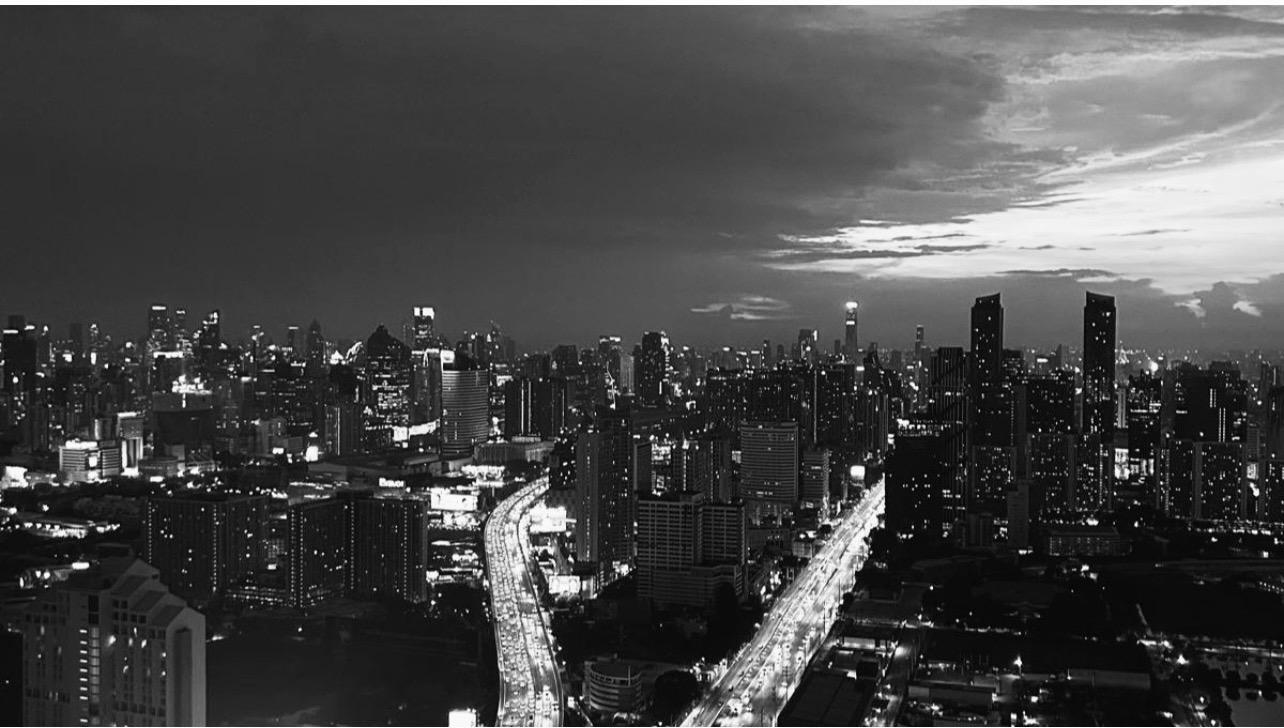
I've been in Bangkok since Friday, planning to live and work here for a few weeks. Shortly after arriving, I rented a scooter. I have to admit, I was somewhat apprehensive about venturing into the traffic of this enormous city.
It's not as though I'm an inexperienced rider. I ride a motorcycle almost every day in Hamburg and Barcelona. And traffic in Spain can be pretty lively, to put it mildly. But Bangkok is another level entirely. And not just because they drive on the left. Cars, buses, trucks, scooters, and tuk-tuks move across multilane roads in what initially appears to be complete disorder. Vehicles constantly change lanes, while others squeeze into the traffic from side streets.
My first impression was that it was chaotic and rather intimidating. Three days later, I see things differently. I now ride through the city with my full attention, but also with a surprising sense of confidence. And along the way, I've noticed something interesting, both about myself and about the traffic around me.
2. Why I Suddenly Stopped Getting Annoyed
At first, I repeatedly found myself irritated by certain situations. For example, when someone slowly pulled out of a side street right in front of me, even though I had the right of way. My instinctive reaction was exactly what it would have been back home: You can't just pull out like that!
Eventually, however, I realized that the other driver had little choice. On some roads, the traffic simply never lets up. If you wait for a sufficiently large gap, you may never get anywhere. So drivers gradually edge forward. Others slow down or make room, and eventually the vehicle merges into the flow. Traffic keeps moving.
What fascinated me was how quickly my own reaction changed. I stopped seeing these situations as rude attempts to disregard my right of way and began to understand them as part of a shared effort to keep traffic flowing. Now I make room myself when someone needs an opportunity to merge. What initially struck me as inconsiderate suddenly looks quite different when viewed from the other person's perspective.
3. Is Having the Right of Way the Same as Being Right?
Of course, Thailand has traffic rules too. But in my experience, they are applied far more flexibly than in Germany. What initially surprised me was how attentively many road users respond to one another. Car drivers keep an eye on scooters, bus drivers anticipate vehicles alongside them, and awkward maneuvers are often met with a degree of understanding. Not every deviation from the rules immediately triggers honking or outrage. On reflection, this makes sense: When you cannot rely entirely on everyone following the rules, you have to pay closer attention to one another, for their sake as well as your own.
That doesn't mean traffic here is objectively safer. Thailand has significant road safety risks, particularly for motorcyclists. But I have been struck by the mutual awareness and tolerance I've experienced.
In Germany, we tend to insist more strongly on others respecting our right of way. And when someone fails to do so, our first concern is often who was in the right. Yet it is entirely possible to be legally in the right while doing very little to help a situation work out well.
4. When Every Mistake Leads to Another Rule
As I thought about this, I was reminded of discussions I regularly encounter in companies. Organizations, too, rely on rules to coordinate how people work together. Larger organizations in particular need clear responsibilities and reliable processes.
But I often observe a familiar pattern: When something goes wrong, we respond by introducing another rule. A decision turns out badly? From now on, another manager must approve it. Important information wasn't passed on? We introduce an additional reporting requirement. Someone abuses a freedom they were given? That freedom is restricted for everyone.
Each measure may make sense on its own. But over time, they create an increasingly dense network of rules, controls, and approvals. People who concentrate on complying with every requirement may eventually spend less time asking whether what they are doing actually makes sense. Responsibility gradually shifts from individual judgment to the process itself.
5. What Rules Cannot Achieve
This brings me to a question that also features prominently in Germany's debate about reducing bureaucracy: How much do we really need to regulate, document, and monitor? And how much can we leave to the personal responsibility of individuals and businesses?
Of course, abandoning controls altogether would be naive. Rules protect against arbitrary decisions and abuse. They are indispensable, particularly where health, safety, or significant economic risks are involved. But we should not assume that increasingly detailed regulations can anticipate every possible situation or prevent every instance of misconduct.
Reality is simply too complex for that. People will always encounter situations in which they must make their own decisions, weigh competing considerations, and show consideration for others. That requires trust: trust that people will take responsibility rather than merely checking what is explicitly permitted or prohibited.
6. My Impuls
I certainly wouldn't suggest adopting Bangkok's traffic system wholesale as a model for German road planning or other regulatory frameworks. But the past few days have reminded me how much a functioning society depends on people paying attention to one another, showing consideration, and trusting others to do their part.
How much trust do we genuinely place in the people working in our organizations? Where do we introduce new rules because we don't trust them to make responsible decisions themselves? And could we, in doing so, be undermining precisely the personal responsibility we expect them to demonstrate?
After all, responsibility develops when we trust people to think for themselves, consider others, and exercise sound judgment. I just hope those same principles will continue to see me safely through Bangkok's traffic over the coming days.